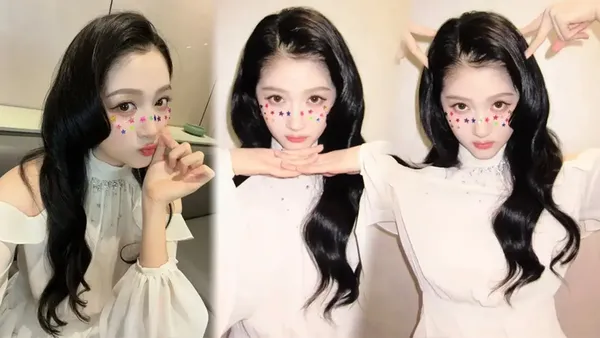
The attendance rate for secondary concerts exceeds 95%. The secondary music industry is worth exploring
He believes that "secondary yuan" music has a strong support and dissemination effect on IP industry chains such as animation and games, and will extend to fields such as ancient customs, virtual idols, and seiyuu in the future. The potential of segmentation is worth exploring. The "second-dimensional" singers who wear exaggerated clothes and sing anime theme songs are no longer a niche enthusiast. Together with anime songs, they have gradually formed the "second-dimensional" music industry, and a wonderful phenomenon occurs in the collision with the "third-dimensional" world. Chemical reaction.
As the "secondary yuan" market grows, like comics, animations and other derivatives,"secondary yuan" music is becoming more and more respected.
Original title: "Second Yuan" music is also a good business.From the popular anime role-playing, to small-scale commercial comics exhibitions, to anime concerts for tens of thousands of people, the "second Yuan" virtual world dominated by young people, is demonstrating its strong market appeal in the real world. Recently, Tencent Animation held its first "secondary yuan" concert in China with domestic animation protagonists as the core, and the attendance rate exceeded 95%.

The
"second-yuan" singers who dress exaggerated and sing the anime theme song at the Dragon Boat Festival Animation Carnival held in Zigui, Hubei Province are no longer a niche enthusiast. Together with anime songs, they gradually form the "second-yuan" music industry, and in the collision with the "third-yuan" world, a wonderful chemical reaction takes place.
"Second Dimension" music links "Third Dimension" world
"I have heard the theme song at the concert hundreds of times, but I am still passionate and red at the scene." An anime fan who participated in Tencent Animation's "Night of Awakening" national comic concert lamented on Weibo. Although he took a lot of trouble to get the live ticket, he saw his favorite anime character walking out of the electronic screen and standing on the stage singing familiar melodies. On the reality, it is like a dream coming true. The same emotional resonance has made many "secondary yuan" fans bluntly say: This is a youth mark belonging to the post-90s and post-00s generation.
For more older young and middle-aged people, it is difficult to understand the obsession of boys and girls with animation soundtracks. In fact,"secondary yuan" music not only includes anime and game-derived titles, theme songs, character songs and interludes, but also includes netizens 'covers and re-lyrics of animated music. These storytelling and inspiring anime melodies, together with the "secondary yuan" products, constitute a unique spiritual world for the younger generation.
Nowadays,"second-dimensional" music has moved out of niche circles and extended to the "third-dimensional" world. Pop singers such as Li Yuchun have also begun to sing "second-dimensional" songs. More and more "second-dimensional" singers and virtual singers have also appeared on the real stage.
In 2016, at the BML "Second Yuan" concert hosted by the domestic barrage sharing website bilibili (referred to as Station B for short), virtual singer Luo Tianyi used holographic technology to perform on the stage, and 12,000 concert tickets were sold out in less than two hours. Among them, the most expensive infield ticket, which sold for 1280 yuan, was "snapped" in just 4 minutes.
"At first, I just wanted to give the 'secondary yuan' group a chance to communicate offline, but I didn't expect it to become a scale of 10,000 people." Chen Rui, chairman of Station B, told the media. There is no doubt that the younger generation is forming new value recognition and musical aesthetics. Their love for virtual life in the "secondary" world radiates new vitality in the real world.
The fan economy promotes the "secondary yuan" original music industry
. As the "secondary yuan" market grows, like comics, animations and other derivatives,"secondary yuan" music is increasingly respected. On Station B, music has become the second largest traffic area after animation. About one-sixth of the monthly average of more than 300,000 original videos are music videos, and the vast majority are "secondary" music.
In Japan, where the animation industry is developed, the "secondary yuan" music industry is regarded as a good business on the market. It is understood that in the 2014 ACG industry (the merged abbreviation of English Animation Animation, Comic Comics, and Game Games) Live Entertainment Market Report,"secondary" music, including "2.5-dimensional" musicals and animated music concerts, accounted for 57.5% of the entire entertainment market share, and revenue from "animated music concerts" alone reached 8.565 billion yen.
Industry insiders said that in Japan, all types of "secondary" online original songs have mature monetization channels and can compete with popular pop music. In contrast, the commercialization process of "secondary yuan" music in China has just begun.
In the current domestic music industry,"secondary yuan" music is still a niche like other independent music. There are few professional music releases, and at the content creation level, it is still dominated by small teams or even individuals. Especially on music platforms that accumulate "second yuan" interests, many musicians have developed from game players and "second yuan" enthusiasts.
Due to the low production cost, many musicians have gone from initial lyrics and covers to composing their own lyrics and compositions to attract fans, and make profits through fans paying to download songs and sharing appreciation. As a result, these platforms have cultivated and discovered a large number of original musicians with strong fan effects.
Fans in the "secondary yuan" music circle are highly sticky and interactive about IP such as animation and games and the resulting "secondary yuan" music, and the emotional substitution and communication power of the music itself have also driven more "secondary yuan" The same creative enthusiasm.
The potential of "secondary yuan" music is worth exploring.
"Will the 'secondary yuan' concerts dedicated to people born in the 1990s continue to be a niche, or will they gradually become popular music as the new generation grows?" On the online Q & A platform Zhihu, some netizens asked questions like this, which triggered a lot of follow-up discussions.
Some cultural and entertainment researchers believe that "secondary yuan" music labeled as the post-90s generation faces too narrow a group of creators and consumers to become true popular music. At the same time, music products attached to "secondary yuan" products cannot exist independently, and future development may be limited.
Homogenization is also considered to be an important obstacle to the development of "secondary" music. At present, my country's monthly output of "secondary yuan" music is nearly 50,000 pieces, but due to the low production cost, the quality is uneven. For example, some ancient music arrangements are similar, and fans complain,"Different ancient songs all sound like the same song."
However, other industry insiders are optimistic about the future of "secondary" music. Music critic Chen Xianjiang said that for the generation who grew up watching anime, the "secondary" culture they like is likely to become mainstream in the future. At the same time, this generation has a clear awareness of payment for "secondary" derivatives, which can make "secondary" music go further.
At the second China Music Finance Annual Conference held in April this year, Lu Xiaoxu, CEO of "secondary yuan" music platform Xiaoxu ACG Music, predicted that "secondary yuan" music represents the music trend of a category in the future, covering more people and having stronger consumption power. He believes that "secondary yuan" music has a strong support and dissemination effect on IP industry chains such as animation and games, and will extend to fields such as ancient customs, virtual idols, and seiyuu in the future. The potential of segmentation is worth exploring.
Editor: Mary
 白羊座
白羊座 金牛座
金牛座 双子座
双子座 巨蟹座
巨蟹座 狮子座
狮子座 处女座
处女座 天秤座
天秤座 天蝎座
天蝎座 射手座
射手座 摩羯座
摩羯座 水瓶座
水瓶座 双鱼座
双鱼座