The film Fengshen I released a special series of visual effects to reveal the secret of visual effects production, which landed the imagination of Chinese mythology.
China's first national mythological epic, Fengshen I, has released a visual effects special, creating mirrors to analyze the cooperation of artists in different departments of the...
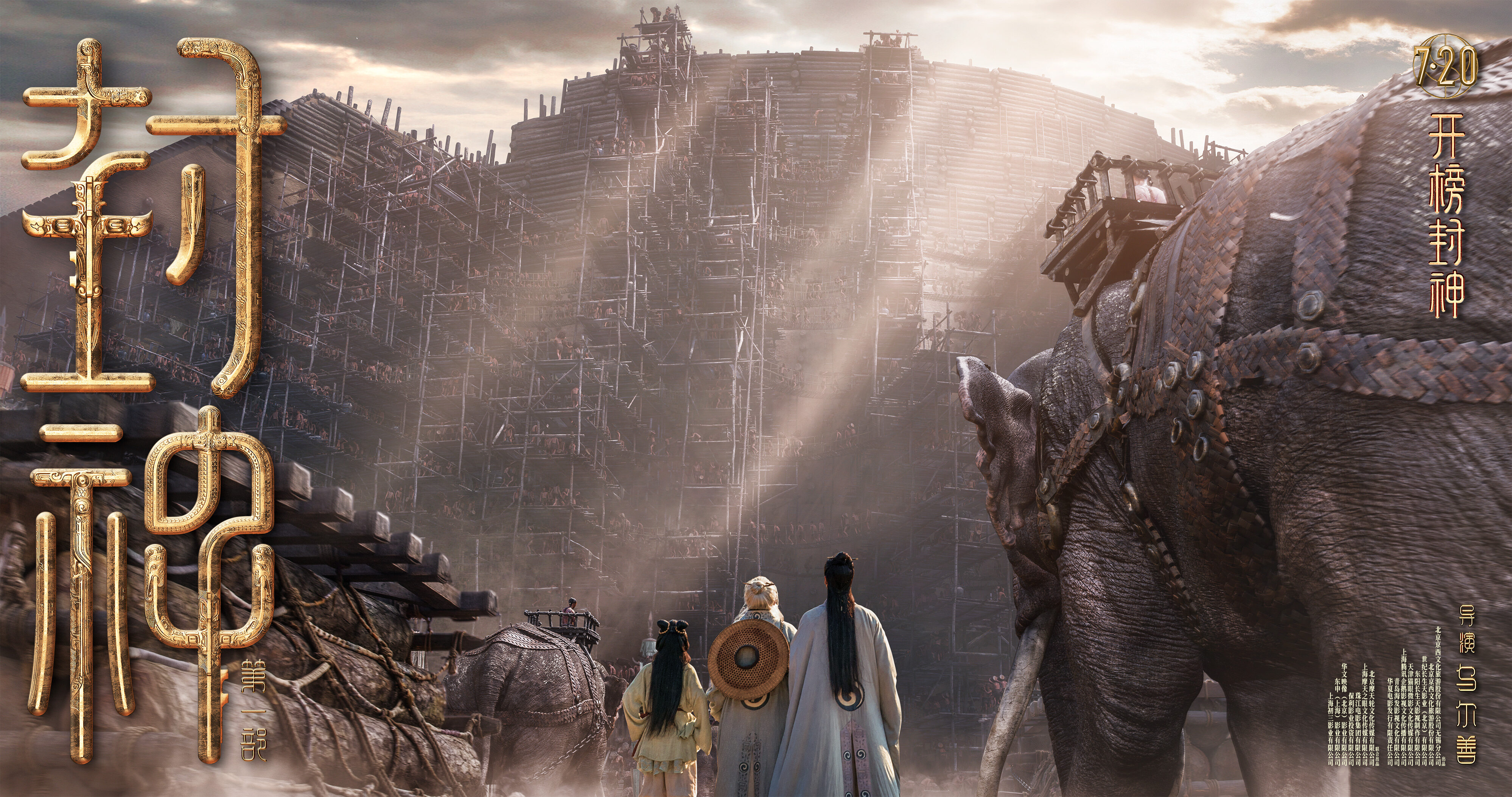
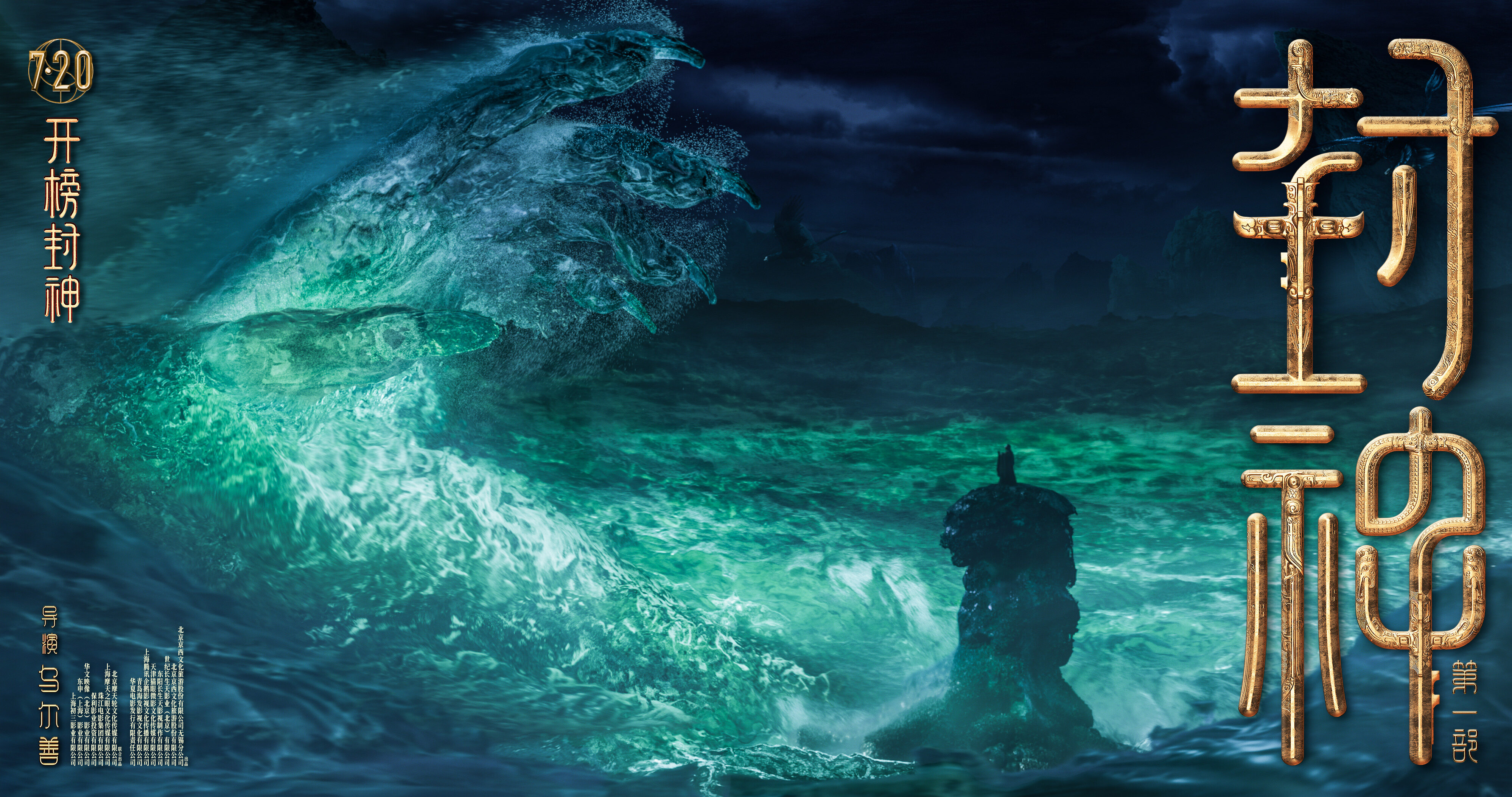


China's first national mythological epic, Fengshen I, has released a visual effects special, creating mirrors to analyze the cooperation of artists in different departments of the film's visual effects workflow. reveal four categories of visual effects shots: digital characters, digital creatures, cluster animation and mythological landscape. Each frame is ingenious and polished, adhering to the original Chinese culture, aesthetic and world-class technical standards, so that the imagination of Chinese mythology can be perfectly landed. Directed by Urshan, the film, starring Fei Xiang, Li Xuejian, Huang Bo, Yu Shi, Chen Muchi, Na ran, this Sha, Wu Yafan, Xia Yu, Yuan Quan, Wang Luoyong, Hou Wenyuan, Huang Xiyan, Li Shirui, Yang Kui and Chen Kun, will be released nationwide on July 20 and is in a hot pre-sale. On July 18 and 19, the National IMAX, CINITY and Dolby Visual effect Hall will continue to show.
A large number of conceptual design and animation previews are used to make up for the missing departments of China's film industry
The newly released visual effects special focuses on the visual effects production of Fengshen I. Director Wu Ershan believes that the bottleneck that Chinese films most need to break through is fantasy films. Therefore, the Divine Trilogy is not only a pioneer of Chinese mythological epic films, but also promotes the establishment and upgrading of the relevant film industry system, in order to explore more possibilities of Chinese films.
The Fengshen Trilogy has two characteristics in terms of visual effect, the workload is huge and the work is very difficult. "Fengshen I" alone has more than 1700 visual effects shots, and the visual effects work takes nearly four years from preparation to completion. To this end, director Wuershan specially set up the visual effects company Meisi Image, hoping to perfectly combine Chinese aesthetics and creativity with the most advanced film technology in the world, as well as to train and look for artists in different fields. make up for the missing departments in China's film industry.
The first to bear the brunt is conceptual design. The three conceptual art teams, Zhonghe Studio at the end of the four Seasons, Tianheyan Studio by Xu Tianhua and conceptual artist Li Yunzhong, were invited to join the Fengshen Trilogy. They contribute their aesthetics and creativity to the conceptual design at many levels, such as character modeling, fantasy biology, scene, plot key frame and so on, so as to establish the aesthetic foundation of Chinese original creation and provide the basis for visual effect production. Wu Yibei, a visual effects producer, revealed: "before we do all the work, we will first have the conceptual design of this art, its atmosphere map, its key frame, and then we can imagine what it will be like in three-dimensional space."
The second is to visualize the story with camera language through animated previews, which is widely used in the Fengshen trilogy, in which the animated preview of Fengshen I took 125 minutes. In the view of director Wu Ershan, animation preview is necessary for the mythological epic type: "it provides each production department with a goal of what to do in the live shooting part." the visual effects department has to complete the creation of scenes, special creatures and characters that cannot be done. " Making animation preview can not only solve the problems that may be encountered in the scene shooting, but also let various departments clearly understand the corresponding work content, play a role in improving work efficiency, and is an important part of the film industry system.
Visual effects special reveals four types of visual effects lens ingenuity to implement the imagination of Chinese mythology
The movie "Fengshen I" opens the prelude to the Fengshen trilogy, which is about the collusion between Yin Shou, the king of Shang, and Da Ji, the fox demon. Kunlun fairy Jiang Ziya went down the mountain with the list of gods to find the common master of the world in order to save lives. Ji Fa, the son of Xibo Hou, gradually discovered the true face of Yin Shou and began to sing songs.
The type of mythological epic determines that the God-sealed Trilogy is bound to face great challenges in terms of visual effect. The difficulty of visual effect of Fengshen I mainly focuses on four aspects. First of all, the digital character Lei Zhenzi, not only to maintain the aesthetic effect of traditional Chinese modeling, but also to make the audience believe that this creature really exists. To this end, the visual effects team spent months studying how Lei Zhenzi took off from a starting, stationary or jumping state to give it a sense of reality. In the performance, Lei Zhenzi's dynamic capture actor Han Pengyi made a special trip to learn a week's experience from Andy Serkis, the first dynamic capture in Hollywood. Han Pengyi found that the most fundamental thing in dynamic capture performance is to return to the character itself. he designed a complete performance for Lei Zhenzi, according to Lei Zhenzi's "most important emotions and most important connections." to create all its action guides, its vocal guides, and thinking guides.
The second level is digital biological ink unicorn, nine-tailed fox, dragon-bearded tiger, gluttonous and so on. Conceptual artists study their modeling principles, and then digital artists biologize them. Give these digital creatures based on the movements of different kinds of animal creatures in nature, in order to achieve realistic results and make the audience believe that they really exist in reality. Then there are group animations, which are used to produce war scenes with thousands of troops, such as mass scenes such as Yinshou triumphant return welcomed by the people in Chaogcheng, thousands of farmers building sacrificial rooftops, and so on. Finally, there is the scenery in the mythological world, such as Kunlun Wonderland, which spans three or four years from research and development to implementation, and the difficulty of visual effect production lies not in technology, but in aesthetics. Ye Chin-tien, an art director and styling director, revealed that in order to present the Kunlun Mountains imagined by Chinese scholars, "I have seen a lot of Song Dynasty landscape paintings and put forward a kind of virtual environment." he was finally inspired by the Song Dynasty green landscape painting "Thousand miles of Rivers and Mountains". I believe that every audience after watching the film will be shocked by the magnificent mythological imagination and detailed visual effects. Three thousand years of mythology has come true. Let's witness the rise of Chinese mythology together.
Film Fengshen I is directed by Urshan, starring Fei Xiang, Li Xuejian, Huang Bo, Yu Shi, Chen Muchi, Na ran, this Sha, Wu Yafan, Xia Yu, Yuan Quan, Wang Luoyong, Hou Wenyuan, Huang Xiyan, Li Xirui, Yang Jie and Chen Kun. Wuxi Branch of Beijing Jingxi Culture and Tourism Co., Ltd., Beijing Jingxi Cultural Tourism Co., Ltd., Century Changsheng Sky Film (Beijing) Co., Ltd., Dongyang Changsheng Film and Television production Co., Ltd., Tianjin Maoyan Weiying Culture Media Co., Ltd., Shanghai Tencent Penguin Film and Television Culture Communication Co., Ltd., Qingdao Haifa Film and Television Culture Co., Ltd., Huaxia Film Distribution Co., Ltd. The film will be released nationwide on July 20 and is in a hot pre-sale.
 白羊座
白羊座 金牛座
金牛座 双子座
双子座 巨蟹座
巨蟹座 狮子座
狮子座 处女座
处女座 天秤座
天秤座 天蝎座
天蝎座 射手座
射手座 摩羯座
摩羯座 水瓶座
水瓶座 双鱼座
双鱼座