
The movie "Fengshen part I" released art scene special and scene poster ingenuity to create a Chinese style Fengshen world.
China's first national mythological epic, Fengshen I, has released a special art scene, focusing on the selection of the film's location and the behind-the-scenes story of the sett...
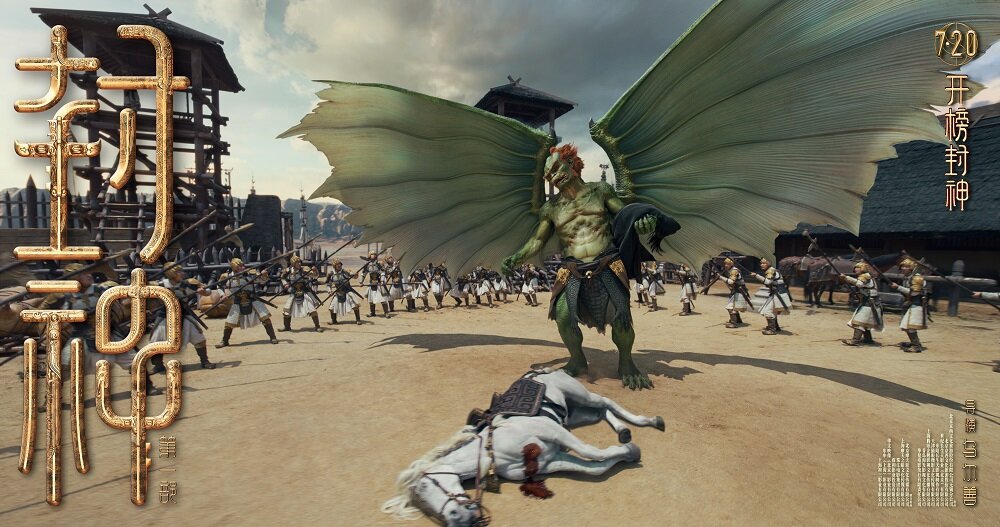
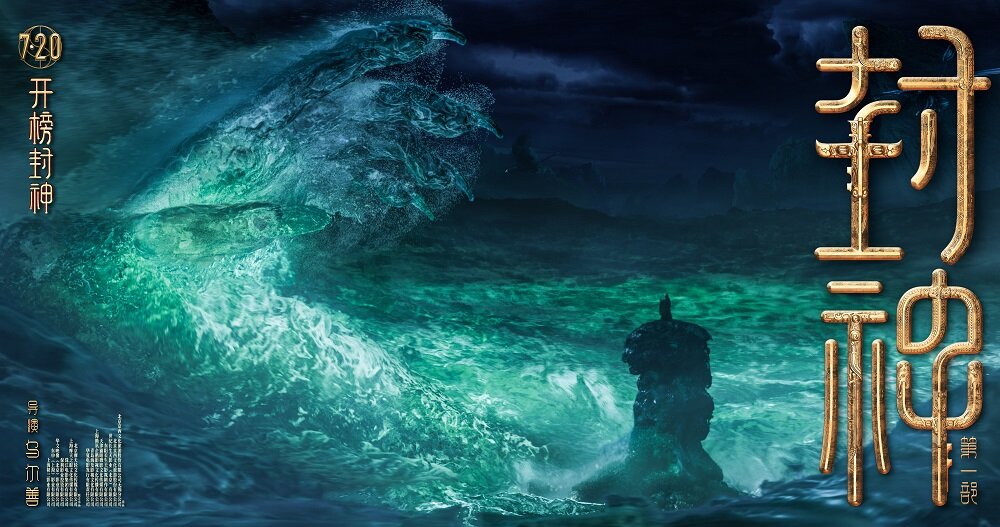
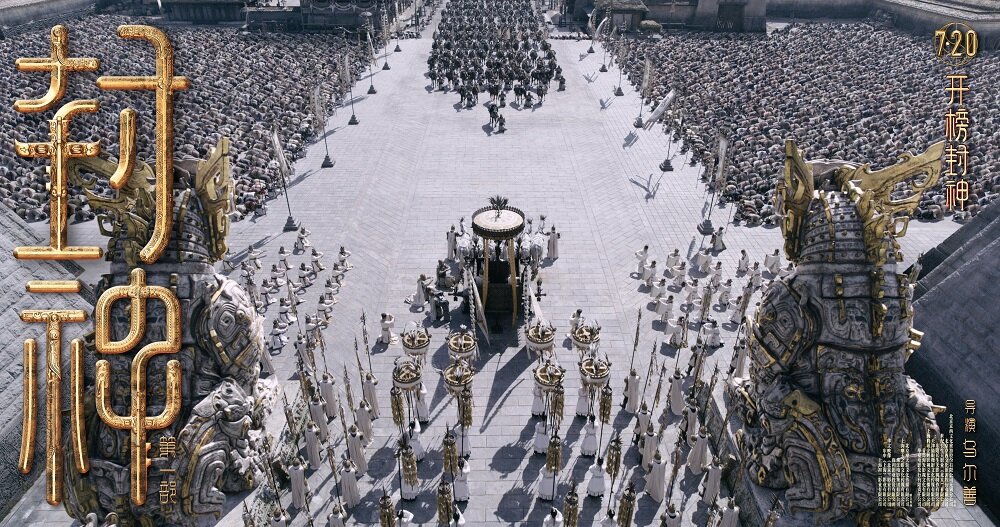
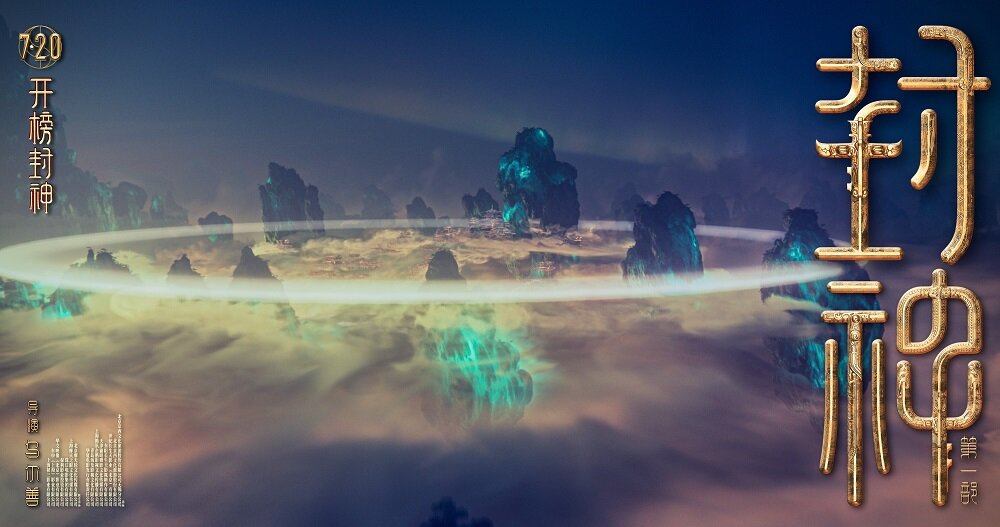
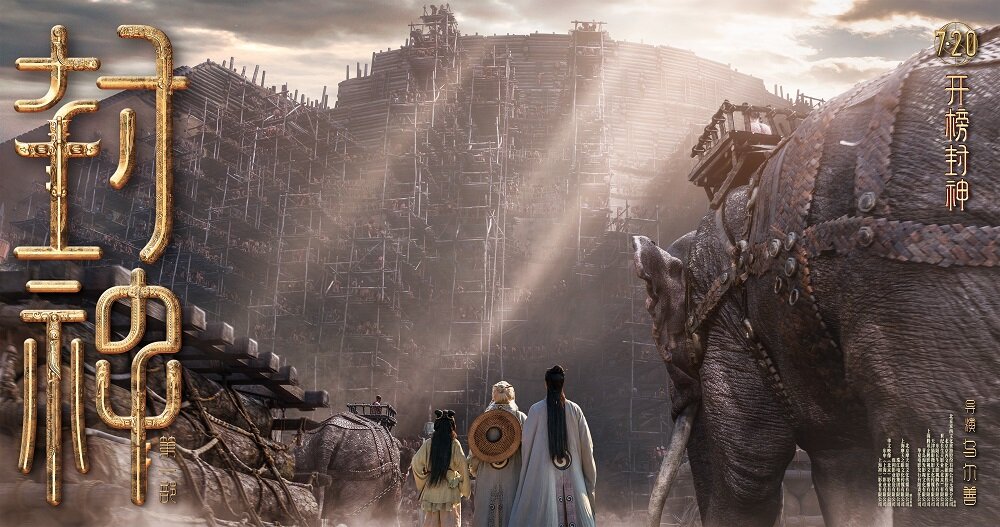
China's first national mythological epic, Fengshen I, has released a special art scene, focusing on the selection of the film's location and the behind-the-scenes story of the setting in the shed. During the same period, nine posters of scenes were also exposed. in these majestic movie scenes, we can see not only the rich natural landscape of Damei China after thousands of years, but also the presentation of Chinese aesthetics full of creativity and craftsman spirit. The art and visual effects team absorbs ancient books and archaeological achievements, recreates the imagination, achieves a perfect blend of real-scene shooting and digital simulation, and jointly creates a divine world that belongs solely to the Chinese style.
Directed by Urshan, the film, starring Fei Xiang, Li Xuejian, Huang Bo, Yu Shi, Chen Muchi, Na ran, this Sha, Wu Yafan, Xia Yu, Yuan Quan, Wang Luoyong, Hou Wenyuan, Huang Xiyan, Li Shengrui, Yang Kui and Chen Kun, will be released nationwide on July 20th and is in a hot pre-sale. The National Special effects Hall will open from 19:00 to 21:00 on July 15 and 16.
traveled to hundreds of inaccessible places in China to find the unique ancient beauty of China
The movie "Fengshen I" opens the prelude to the Fengshen trilogy, which is about the collusion between Yin Shou, the king of Shang, and Da Ji, the fox demon. Kunlun fairy Jiang Ziya went down the mountain with the list of gods to find the common master of the world in order to save lives. Ji Fa, the son of Xibo Hou, gradually discovered the true face of Yin Shou and began to sing songs.
In the newly released art scene special, director Wu Ershan said frankly that in order to make a Chinese mythological epic, the scene of sealing the world of gods will eventually have to be found in China. The selected Art Tree revealed: "(we) consulted some ancient climatological experts and made a material distribution map of climate and environment in the Shang Dynasty, corresponding to the environment in the distribution table we found, and then look for it on the current map of China." In the end, the crew traveled all the imagined places that might still have ancient features, covering hundreds of places. Director Wuershan believes that in those inaccessible places, there may still be some ancient beauty of 3,000 years ago, "vigorous and powerful, and then full of sadness and magnificent feeling, this kind of beauty can only be found in our Chinese scenery."
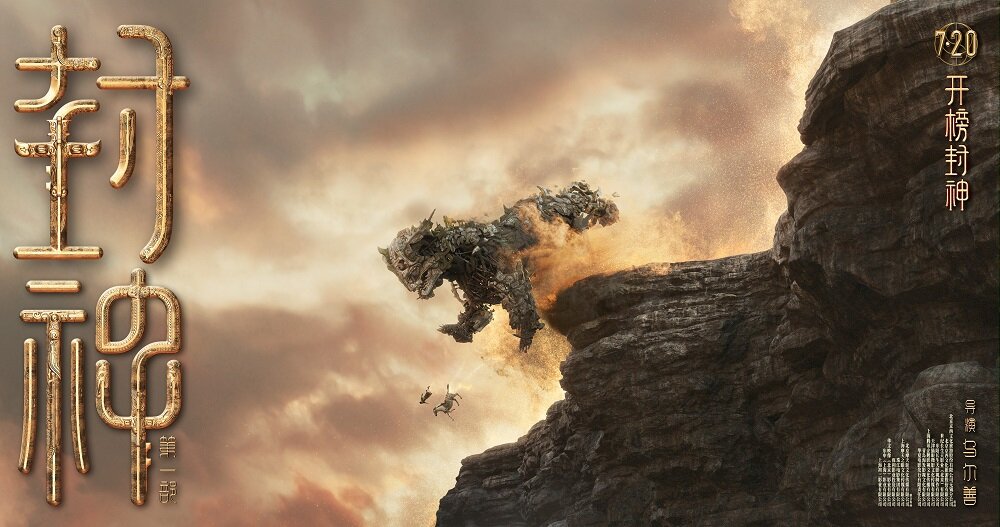
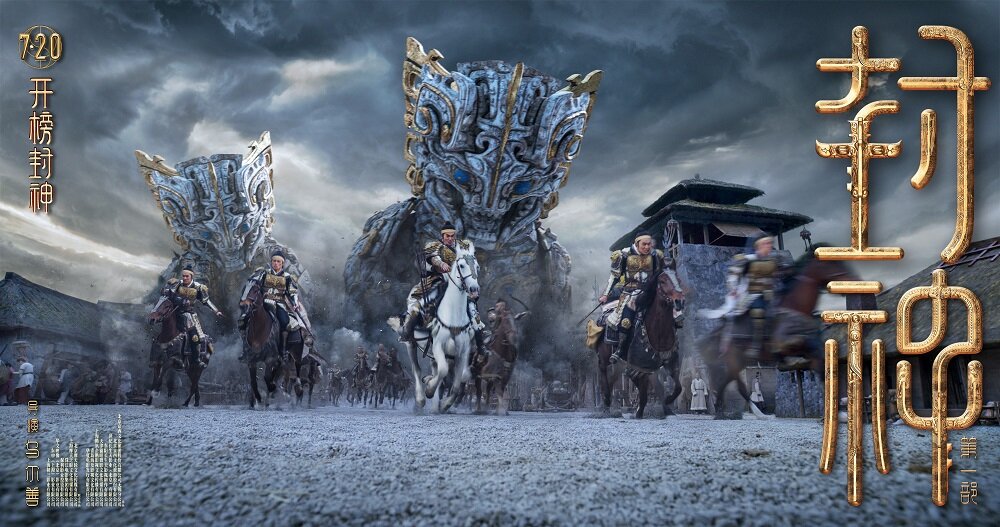
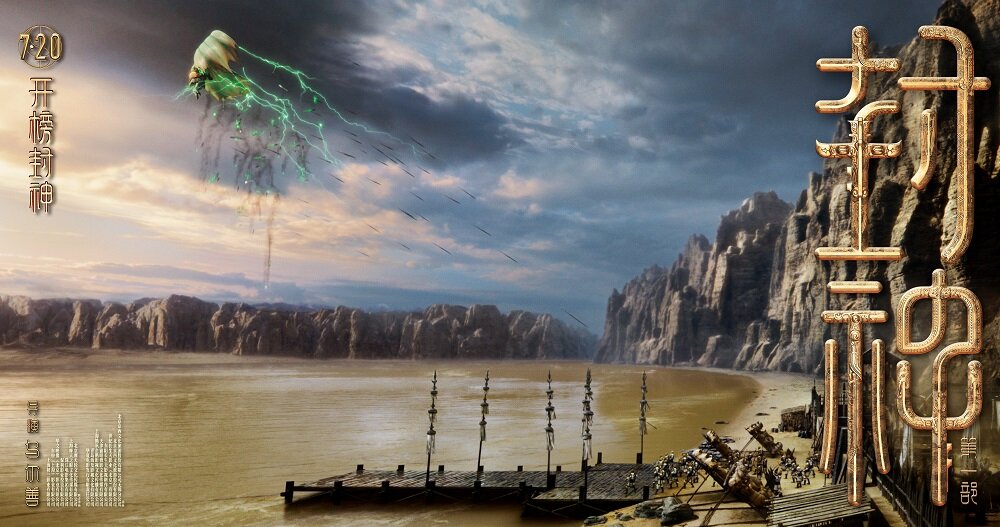
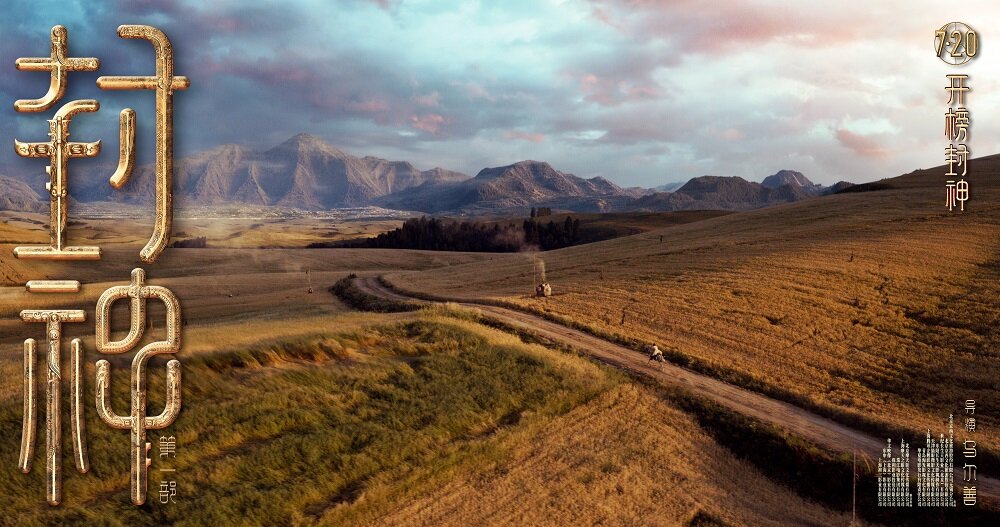
From a group of nine scene posters released at the same time, it is not difficult to find the natural beauty of China. The scene of Taotie and Jifa falling off a cliff is the Hukou Waterfall of the Yellow River, which is very familiar to Chinese audiences. The scene of Jifa riding through wheat fields and distant mountains is set in Jiangbulak, Xinjiang. In addition, Proton's triumphant tour of Chaoge City, the sacrificial rooftop faced by Jiang Ziya Yang Naha, Kunlun Wonderland with reference to the famous painting of Qinglu Mountain, the ferry crossing and walled city where Lei Zhenzi saved his father, the surging Jinao Island, and the Taotie Chaoge outside the Chaoge City, all reflect the ingenious integration of Chinese natural landscape, traditional architectural aesthetics and mythological imagination, making the mythological epic world more magnificent and magnificent.
four and a half months to build Longde Hall scene in the studio to restore Motuo primeval forest
The workload of setting up the first movie is extremely huge, and the creative team hopes to open up an immersive and eye-opening world for the audience through the restoration and construction of the ancient world and the mythological world. In the newly released special, scene art director Zhang Cheng said: "there are more than 120 scenes, and there should be more than 100 single buildings." In the film, audiences will see unimaginable ancient cities, Chaoge city with strong industry, commerce and military, Xiqi city with simple and peaceful development of agriculture, and Jizhou city with tribal characteristics in alpine areas, showing the style characteristics of different regions and degrees of civilization development. On the other hand, important scenes of different styles, such as the magnificent Longde Hall and Square, the Lutai of the concept of "Qizhong Heaven", the Shang Zong Temple, the mysterious and humble Niu Temple, and the primeval forest full of ancient flavor, are more like pictures of Chinese classical aesthetics. each design and craftsmanship are unique.
Of all the construction scenes of Fengshen I, the regulation of Longde Hall is the highest. It is a place where power and desire are concentrated. It not only adopts the royal palace design, but also has a larger scale than the real palace, and then fills the space with countless details to create the most extravagant Shang Dynasty. Zhang Cheng, director of scene art, said: "use sculpture to set off the whole building, use color painting to emphasize sculpture, and use gold foil to highlight the color painting, the picture will be very rich." It is reported that the Longde Hall scene took four and a half months to build, and at its peak, about 200 clay, wood and stone carvers entered the scene at the same time. In the face of various components that are only a few centimeters small and a few meters large, Qiu Sheng, the scene art director, has adopted a scientific and efficient working mode: "I have made a set of shaping list so that you have any questions about sculpture about the components." you can find the answer in this table, such as decoration, material, number, and effect. "
In addition, in order to capture the mysterious atmosphere of ancient times, the crew creatively recreated the Motuo primeval forest in a super-large studio of 10,000 square meters. The scene art team not only has to face the dynamic shooting needs of each tree, but it is even more difficult to restore the problem, because the details of the primeval forest are complicated, and it is difficult to find the rules, so the staff reprint the appearance of the real trees and bring back the local moss for cultivation, so as to achieve the temperament that director Wuershan wants to have a sense of simplicity and a sense of originality. No matter Longde Hall, Lutai or the primeval forest, the final presentation effect made Ye Chin-tien, an art director and styling director, sigh: "it creates a kind of surreality in that kind of realistic space." Director Wu Ershan hopes to make the audience feel a very strong extreme, personality aesthetics and the combination of Chinese people's own classical aesthetics and fantasy films in the Divine Trilogy. Three thousand years of mythology makes dreams come true in the rigorous and meticulous creation of the creators, and let us witness the rise of Chinese mythology together.
Film Fengshen I is directed by Urshan, starring Fei Xiang, Li Xuejian, Huang Bo, Yu Shi, Chen Muchi, Na ran, this Sha, Wu Yafan, Xia Yu, Yuan Quan, Wang Luoyong, Hou Wenyuan, Huang Xiyan, Li Xirui, Yang Jie and Chen Kun. Wuxi Branch of Beijing Jingxi Culture and Tourism Co., Ltd., Beijing Jingxi Cultural Tourism Co., Ltd., Century Changsheng Sky Film (Beijing) Co., Ltd., Dongyang Changsheng Film and Television production Co., Ltd., Tianjin Maoyan Weiying Culture Media Co., Ltd., Shanghai Tencent Penguin Film and Television Culture Communication Co., Ltd., Qingdao Haifa Film and Television Culture Co., Ltd., Huaxia Film Distribution Co., Ltd. The film will be released nationwide on July 20 and is in a hot pre-sale.