
I apologize at the end! The controversy over the remake of "Serious Crimes Group Six" comes to an end, exposing the core of the classic IP remake
Jiuzhi Network News On September 7, the criminal investigation drama "Serious Crime Group 6: The Disappeared Alarm" officially concluded. Li Muchen, the actor who plays the new v...
Jiuzhi Network News On September 7, the criminal investigation drama "Serious Crime Group 6: The Disappeared Alarm" officially concluded. Li Muchen, the actor who plays the new version of Ji Jie, released a long article, facing the public opinion controversy over the role on the Internet since the launch. He admitted that the predecessor's version was in front of him and his own performance was insufficient. He failed to meet the audience's expectations for the role of Ji Jie and expressed his sincere apology to all fans.
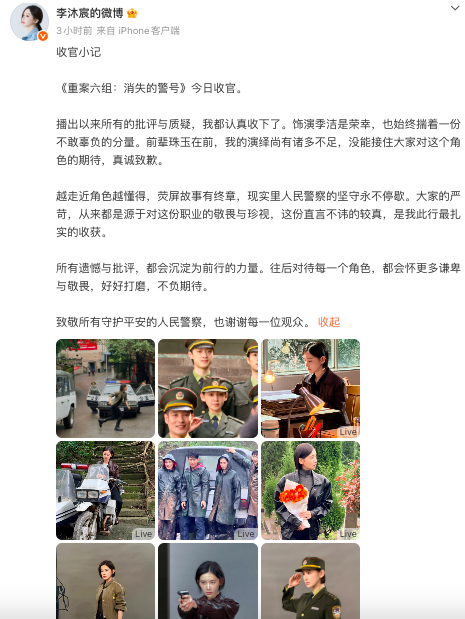
There was no criticism to whitewash, no creation, and no use of the "new adaptation" as a shield. The actors apologized in a plain manner, temporarily putting the controversy over the remake of the entire show to the ground, but throwing out a more acute industry issue: Is the remake of classic characters engraved into the memory of their youth?
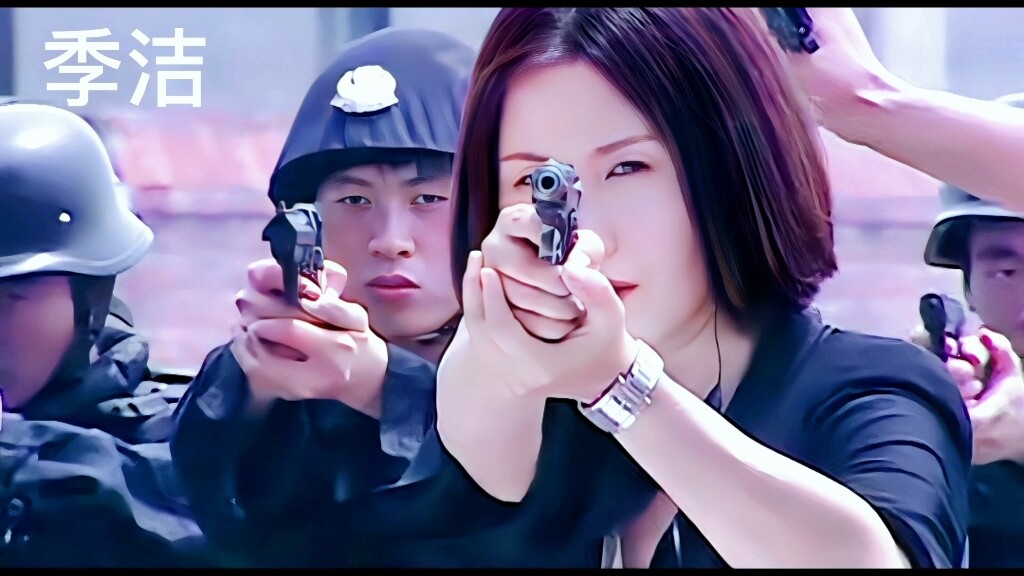
It was not the actor who was scolding, but the broken "Ji Jie filter"
"Serious Crimes Unit Six" has long been more than just a series for domestic criminal investigation drama audiences. The original Ji Jie is capable and brave, without the aura of the protagonist, with the true pyrotechnic spirit of grassroots police officers, and with solid case narratives and vivid group portraits of characters, she has become the "national police officer" in the hearts of a generation. It is precisely for this reason that the new version of Guan Xuan Ji Jie was replaced and had its own controversial buff from the casting stage.
After the broadcast, public opinion was completely divided. Some people complain that the new version of Ji Jie lacks the tenacity and calmness of the original, some feel that the performance traces are too heavy, and others think that the overall narrative style of the series deviates from the original realistic quality. But peeling off all the criticism will reveal that the audience's dissatisfaction is not all directed at Li Muchen's acting skills, but more towards the identity of the "new version of Ji Jie", who instinctively took out the ruler in memory to strictly compare it.
This is the "emotional yoke" that all classic remakes cannot escape. When a character is filtered by time, the audience's expectations for it have long surpassed the character itself-it is mixed with the youth of pursuing the drama back then, nostalgia for old works, and recognition of the quality of criminal investigation dramas of that era. At this time, even if the new actors perform in a regular manner, they will always be "in the eyes of the audience. If you completely reproduce it, you will be scolded as "copying cannot get the essence"; if you dare to adapt it, you will be scolded as "magic changes and ruins classics." Remake IP has eaten the traffic dividend of emotions, and it will inevitably bear the backlash of emotions.
The reason why Li Muchen's apology triggered widespread discussions was precisely because she received this criticism. She did not defend "this is the brand new Ji Jie", but frankly admitted that the classics in the hearts of the audience are irreplaceable. This honesty can win the respect of the audience more than forcibly strengthening respect and speaking in public relations.

The dead spot of the remake: just copy the outer shell and lose the core
But if you look at it in the entire film and television industry, the controversy over the remake of "Serious Crimes Unit 6" has never been as simple as "whether the actors acted well or not."
In recent years, classic IP has been remade one after another, and the vast majority of them have been overturned. It's not that the production funds are not enough, or that the actors don't work hard, but that creation often falls into a strange circle: they only stare at the shell of the replica classic characters, but lose the core that truly holds the original work.
"Serious Crimes Group Six" became a national-level criminal investigation drama back then because it never relied on the name "Ji Jie". It is the realism of the unit case, the fireworks on the front line of criminal investigation, and the fact that every policeman in the group portrait is like an ordinary person around him. If we just focus on "how to play Ji Jie well" and only think about reproducing the character shapes and classic lines today, we will have lost from the creative roots.
The audience scolded the new version of Ji Jie, essentially: What we miss is not a policewoman named Ji Jie, but the creative environment where criminal investigation stories were seriously told. When the remake only wants to consume emotions and gain popularity with IP, but cannot settle down to polish the script and restore the texture, the final result can only be that classics are still classics, and the remake is only controversial.
The remake is not about transcending classics
Now that the series ends and the actors apologise, this public opinion storm will slowly dissipate. But the questions left for the film and television industry are still there.
How to shoot classic IP? Is it to eat the old foundation with feelings, or is it to tell a brand new story through the classic shell? Is the audience's criticism dissatisfied with the actors or with the feelings of being consumed time and time again?
Perhaps the answer has always been simple: remake is never about transcending classics, but about giving good stories and good characters new vitality in the new era. If this cannot be done, no matter how sincere an apology is, it will only be a prelude to the next remake.
 白羊座
 金牛座
 双子座
 巨蟹座
 狮子座
 处女座
 天秤座
 天蝎座
 射手座
 摩羯座
 水瓶座
 双鱼座